
Teste di Moro (The Moorish Head)
Sicily’s Beautiful Ceramic Heads With a Dark Past
Teste di Moro
Sicily’s Beautiful Ceramic Heads With a Dark Past
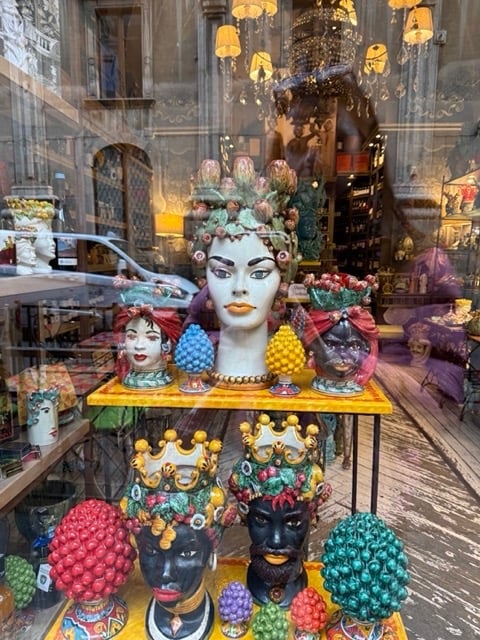
Walking through Sicily, you keep spotting them everywhere: ceramic heads turned into vases, usually a man and a woman, painted in vivid, almost theatrical colors. But what is the story behind them, and why are they so deeply rooted here?
These are not just “cute” decorations. Their most famous origin story is as dark as it gets and comes from Palermo’s Kalsa district, during the period of Arab rule in Sicily, often placed around the 11th century.
According to legend, an African nobleman used to walk daily through the streets of Kalsa. One day, his attention was caught by a young Sicilian woman watering the plants on her balcony. Her balcony was said to be the most lush and flourishing in all of Palermo. From that moment on, his walks had only one purpose: to catch a glimpse of her among her flowers.
The young woman noticed him too, returning his gaze with a modest, almost shy smile. This silent exchange continued for months, until one day she finally invited him inside.
They fell deeply in love, despite everything that separated them: he was Muslim, she was Christian; he was African, she was Sicilian; he was Black, she was white. Their worlds could not have been more different, yet their bond seemed absolute.
Until one fateful day.
He confessed that he would soon have to return across the sea. Only then did she discover his secret: he already had a wife waiting for him back home. Shocked and unable to speak, she spent one final night with him.
That night, she rose from the bed, took his scimitar, and severed his head. Overcome by madness and grief, she carried it to her balcony and placed it inside a clay pot. There, she planted basil, watering it daily with obsessive devotion. The plant grew lush and fragrant, more vibrant than any other in the neighborhood, as if nourished by jealousy, passion, and blood.
Soon, the neighbors, envious of her magnificent basil, asked local artisans to create similar pots. And so, according to legend, the first Teste di Moro were born.